

Portugal’s laws protecting people with disabilities look robust on paper, but a severe lack of uniform enforcement is leaving thousands behind. The National Mechanism for Monitoring the Rights of Persons with Disabilities (Me-CDPD) released a stark assessment of the country’s progress from 2017 to March 2026.
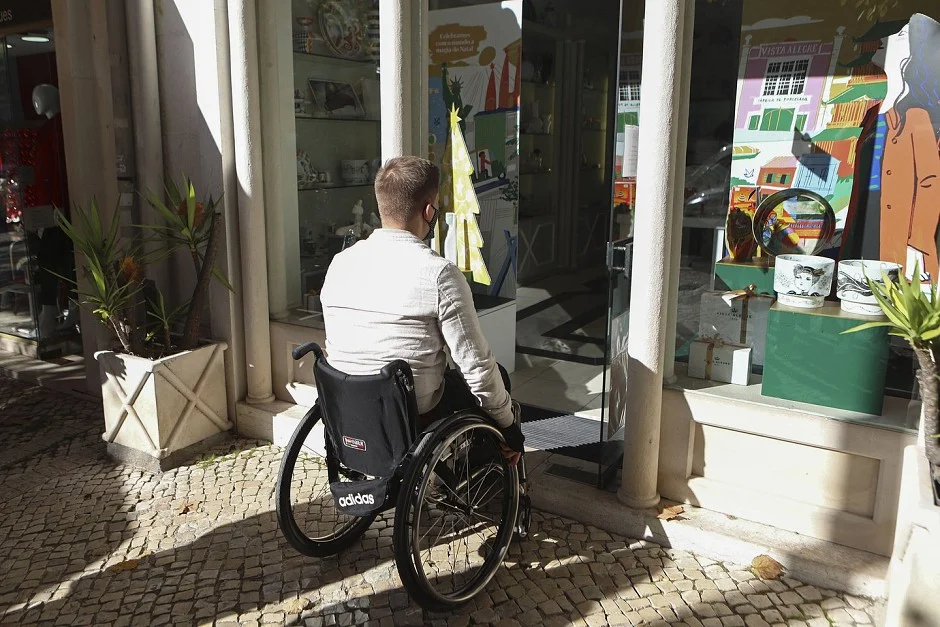
A report on disability rights highlights ongoing disparities in accessibility and legal enforcement across Portugal.
According to Vera Bonvalot, coordinator of the monitoring mechanism, the primary issue is no longer a lack of legislation. The critical failure lies in a highly unequal application of the rules.
“Portugal has advanced in the law, but its application and respect for the law are still insufficient,” Bonvalot said. She noted that a person’s basic rights often depend entirely on their zip code.
The Zip Code Lottery
A citizen might receive essential support in one municipality, while someone in a neighboring town gets nothing. Even two children with identical needs can receive completely different educational resources simply because they attend different schools.
The Me-CDPD stressed that access to fundamental rights cannot rely on local budgets, the subjective interpretation of a professional, or a family’s ability to constantly fight the system. “Rights cannot depend on luck,” Bonvalot said.
The report analyzed several sectors including education, employment, healthcare, justice, accessibility, and political participation. It called for uniform application of the law and legal mechanisms that allow citizens to easily challenge rights violations.
The Illusion of Inclusive Education
Merely placing a child with a disability in a standard classroom does not equal inclusive education. The report found that Portuguese schools desperately lack specialized teachers, operational assistants, and adaptive technologies.
Critical materials, such as braille resources and support for deaf students, remain glaringly absent. Often, the adaptation of a school’s curriculum falls solely on the shoulders of individual teachers or exhausted parents rather than a structured educational system.
Bonvalot argued that true inclusion brings students together rather than separating them into specialized silos. She suggested that public schools could offer Portuguese Sign Language as an accessible option for both deaf and hearing students to learn side by side.
Barriers to Independence and Voting
Independent living remains a distant concept for many. While Portugal introduced the Support Model for Independent Living (MAVI), massive regional disparities mean many disabled adults are still forced to rely entirely on family members or live in institutions.
Basic accessibility in public buildings, mass transit, and digital platforms is still severely lacking. Bonvalot emphasized that accessibility is not just a technical upgrade; it is a mandatory condition for exercising basic human rights like studying, working, and accessing healthcare.
Voting access is another major hurdle. Bonvalot called it “quite scandalous” that a massive layer of the population, including the elderly and disabled, cannot cast a ballot equally. Inaccessible polling stations and a lack of adapted electoral information strip these citizens of their right to an autonomous, informed, and secret vote.
Double Discrimination for Women
The report issued a grave warning regarding women and girls with disabilities, who face intense double discrimination. The monitoring mechanism cited a total lack of concrete protective measures, leaving them vulnerable to severe human rights violations, including forced sterilization without informed consent.
Portugal ratified the UN Convention on the Rights of Persons with Disabilities in 2009. However, the Me-CDPD is clear: progress cannot be quantified by the number of bills passed in parliament.
The true measure of success is the daily freedom, autonomy, and participation of citizens with disabilities. The latest report will serve as an independent benchmark ahead of Portugal’s upcoming evaluation by the United Nations Committee.