

Hard water leaves behind stubborn mineral deposits in household appliances. Over time, these white chalky residues—primarily calcium carbonate, commonly known as limescale—build up inside electric kettles and coffee makers.
This buildup doesn’t just look unappealing; it can significantly affect your appliance’s performance and alter the taste of your morning brew. Fortunately, a simple household staple provides an easy, highly effective fix.
The Science Behind the Solution
White vinegar contains acetic acid, a compound that actively reacts with calcium carbonate. When applied to stubborn mineral deposits, the acid breaks down the limescale.
Allowing the solution to sit and work its way through the appliance softens the buildup, making it easy to wash away residues that have bonded to internal heating elements and water lines.
White vinegar used for household cleaning routines.
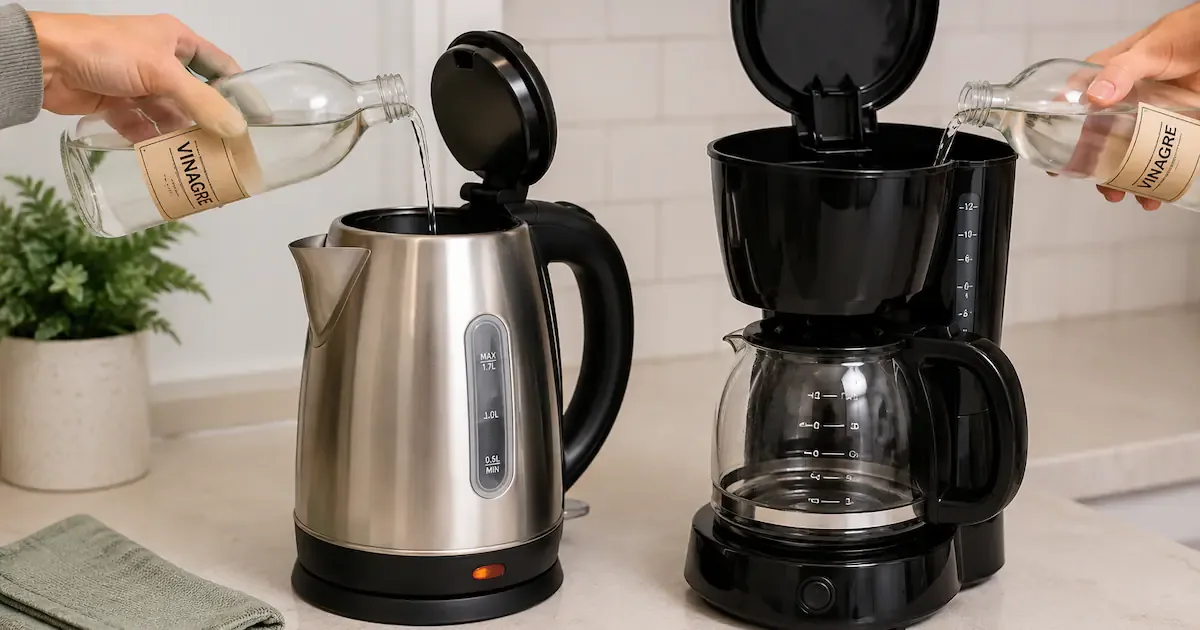
How to Clean Your Electric Kettle
Before starting, always check your manufacturer’s instructions to ensure vinegar won’t void your warranty or damage specific components. If there are no warnings against it, proceed with these steps.
- Unplug the kettle and allow it to cool completely.
- Pour a mixture of white vinegar and water into the kettle, ensuring the liquid fully covers the limescale buildup.
- Heat the solution according to the appliance’s normal operation.
- Empty the hot mixture entirely.
- Rinse the interior multiple times with fresh water.
- Boil a full pot of clean water and discard it to eliminate any lingering vinegar smell or taste.
Reviving Your Coffee Maker
Coffee makers require a similar approach to clear out their internal plumbing and maintain an optimal brewing temperature.
- Remove any coffee grounds and take out the reusable or paper filter.
- Fill the water reservoir with a blend of white vinegar and water.
- Run a standard brewing cycle.
- Discard the hot liquid that collects in the carafe.
- Run two to three additional cycles using only clean, fresh water to flush the system.
- Wash the carafe and any removable parts with warm water and dish soap.
Proper rinsing is the most critical step of this process. Any trace amounts of acetic acid left in the internal circuit will distinctly ruin the flavor profile of your next cup of coffee.